

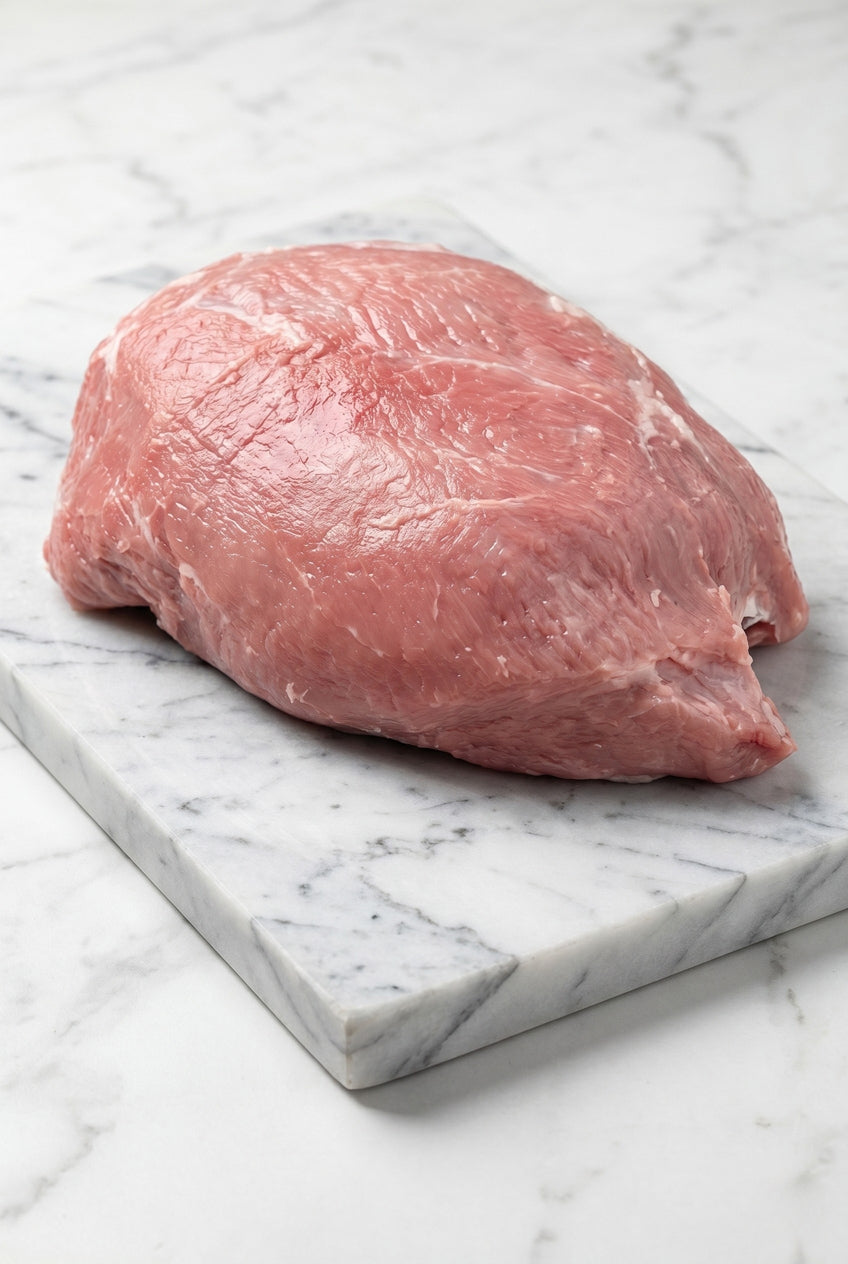
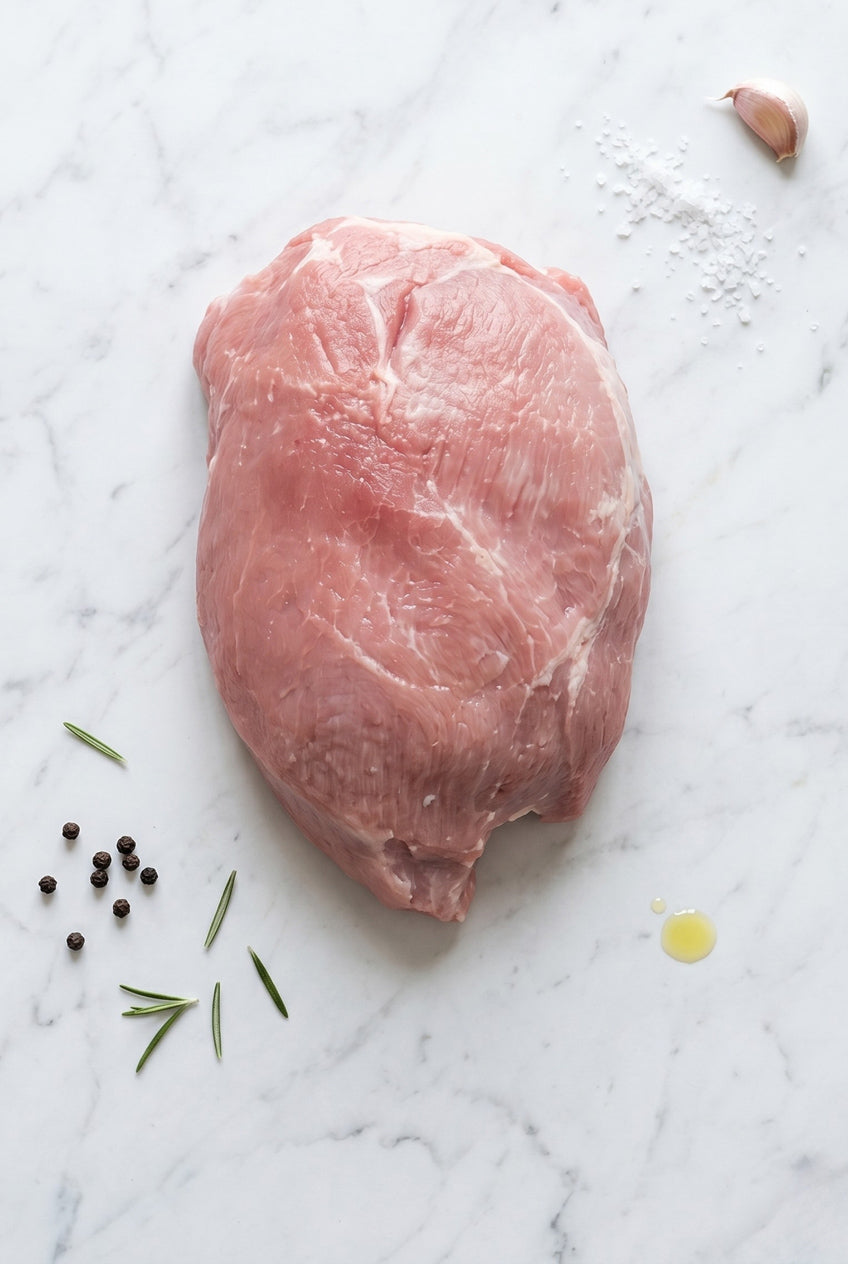
"A butcher's cut of absolute tenderness, with pink flesh and a fine grain, ready to melt in the mouth after slow roasting in butter."
Livraison Offerte
Dès 125€ d'achat
Chaîne du Froid
Fraîcheur garantie
Qualité Artisanale
Découpe tradition
This veal roast, precisely cut from the top or silverside, stands out with its pearly pink flesh and exceptionally fine grain. At Allaert Meat, we select cuts with a light fat covering, essential for nourishing the meat and guaranteeing its tenderness when cooked. On the palate, it offers delicate, buttery aromas, typical of young cattle raised according to traditional methods. To preserve its tenderness, first sear it over high heat in brown butter, then continue cooking gently in the oven at 160°C, basting regularly with its juices. Let it rest under aluminum foil before slicing to ensure the meat is pink and full of juices.
May contain traces of: soya, gluten, lactose, milk.
Delivery and freshness (Belgium only)
- Guaranteed cold chain: Your orders are carefully packed and shipped under controlled temperature (between 0 and 4°C) via DPD Fresh.
- Costs and delivery times: Calculated automatically when validating your cart.
- Receiving your package: As our products are ultra-fresh, your presence is essential at the time of delivery. Place the products in the refrigerator immediately upon receipt.
- Returns: As these are perishable goods, returns are not accepted. We cannot be held responsible in the event of your absence or an incorrect address during delivery.
- Customer service: A problem with your order (damaged or non-compliant package)? Contact us the same day with photos of the package and products at sales@allaert-meat.be or at +32 2 521 28 56.
Returns and refunds
- No standard returns: As these are perishable products subject to the cold chain, we do not accept returns or refunds for non-defective products to guarantee food safety.
- Exceptions (refund or replacement): We only intervene if the order is defective or non-compliant (damaged product, abnormal appearance or smell, missing or incorrect item, faulty packaging).
- Report a problem: Contact us as soon as possible after delivery with your order number, a description of the problem, and clear photos of the product and its packaging.
- Important instructions: For safety reasons, do not return any products to us without our prior validation. Keep the affected items chilled while we analyze the issue.
- Claims contact: Send your request to sales@allaert-meat.be or call +32 2 521 28 56.

Standard Allaert
Uncompromising quality since 1978
When you choose a cut of meat at Allaert, you're not just buying meat; you're participating in a legacy. Each cut is hand-selected by our master butchers, guaranteeing that only the very best reaches your table.
Delivery 0-4°C
Via DPD Fresh & Secure Chain
Artisanal know-how
Hand-cut and precision
Natural finesse
Natural finesse
Our selection emphasizes the delicacy of the meat and an even color, hallmarks of consistent quality. Exceptional provenance and careful rearing yield a fine grain and remarkable tenderness. The result is an elegant, light meat, perfect for precise cooking.

Everything you need to know before you buy
FAQ about Roast veal | 2500 g
What is the ideal internal temperature for a roast veal?
For pink and juicy meat, aim for an internal temperature of 60°C. If you prefer it medium-well, go up to 65°C. Use a meat thermometer and remove the meat from the oven 2 to 3 degrees before your target, as the temperature will continue to rise during resting time.
Should you bard the veal roast before cooking?
As veal is a lean meat, the barding (a thin slice of fatty bacon) protects the flesh from drying out during oven cooking. At Allaert Meat, we recommend keeping the barding on for three-quarters of the cooking time, then removing it to allow the surface of the meat to brown.
How to get concentrated roast drippings?
Place an aromatic garnish (carrots, onions, unpeeled garlic cloves) at the bottom of your Dutch oven. After searing your roast, deglaze the cooking juices stuck to the bottom with a small glass of dry white wine or water, and scrape with a wooden spatula. This liquid will reduce and be enriched by the meat's aromas.
What is the recommended cooking time per kilogram?
Allow approximately 25 to 30 minutes of cooking time per 500 grams in an oven preheated to 160°C-180°C. However, the exact time depends on the thickness of the cut. This is why using a meat thermometer remains the most reliable method to ensure perfect tenderness.
Why is it crucial to let meat rest after cooking?
Heat causes muscle fibers to contract and push moisture toward the center of the roast. A 10-to-15-minute rest under aluminum foil allows the fibers to relax and the juices to redistribute evenly, preventing the meat from bleeding onto your plate when sliced.
What cuts generally make up a quality veal roast?
The best roasts come from the thigh (topside, silverside, or round) or shoulder. Topside offers very lean meat and an extremely fine grain, while the round, slightly more marbled, adds extra juiciness and flavour when roasted.
- Choosing a selection results in a full page refresh.