

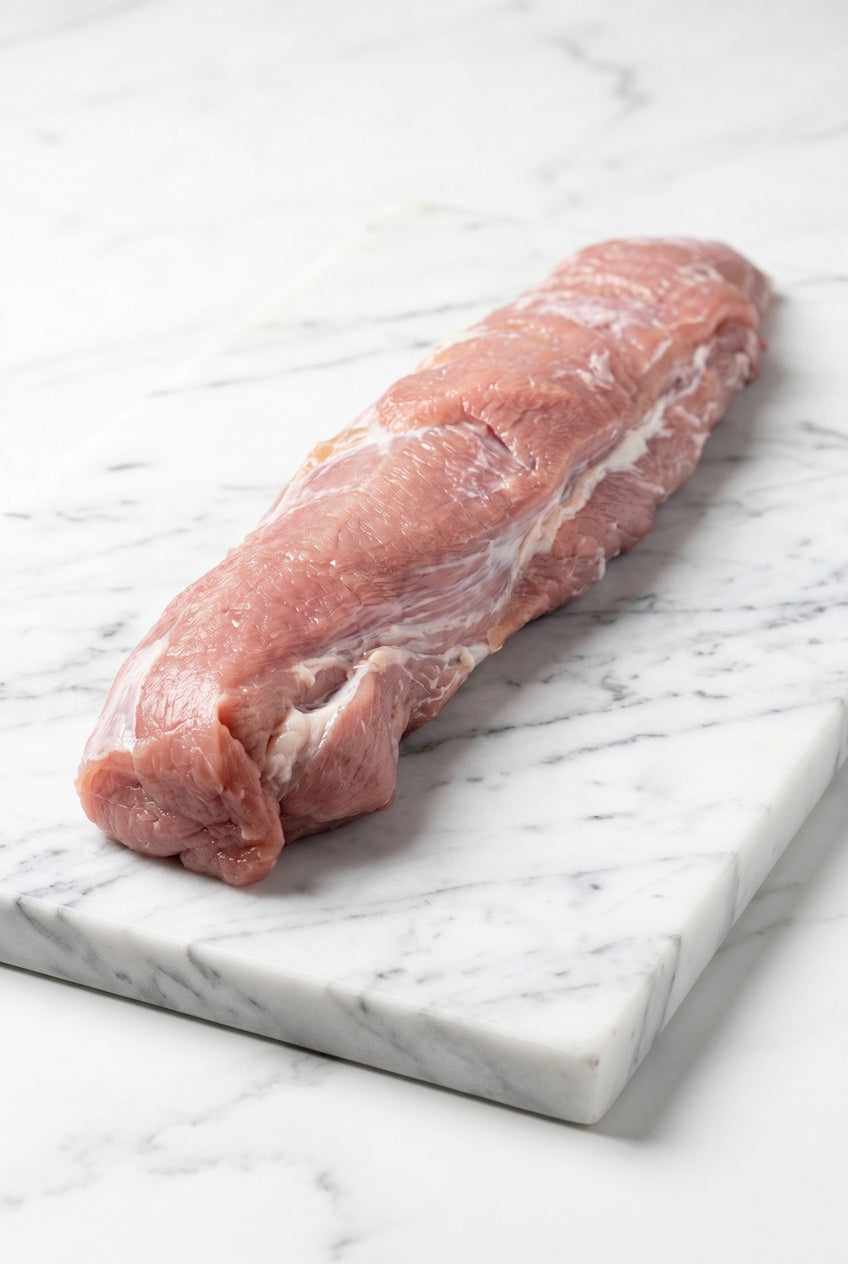
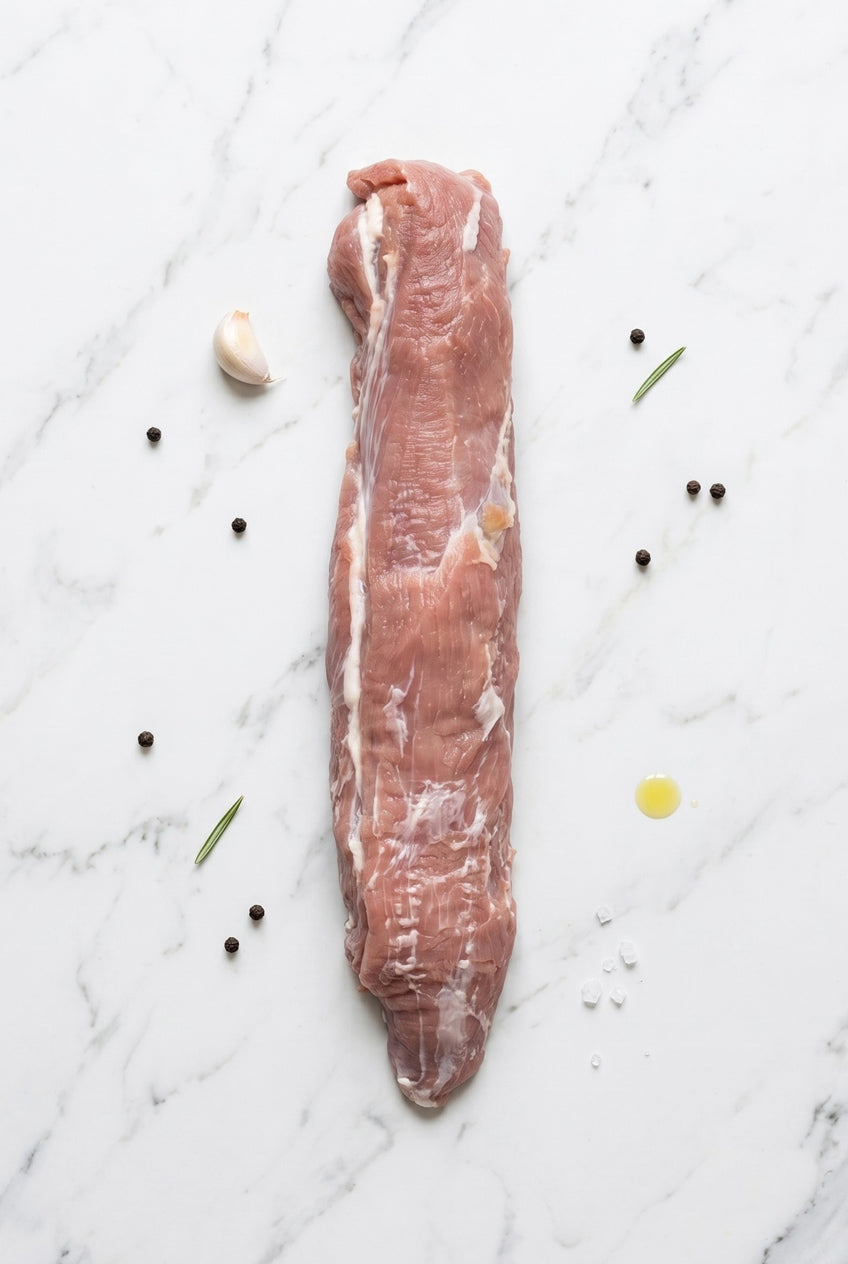
"Very tender cut, quick cooking time, always an elegant result."
Livraison Offerte
Dès 125€ d'achat
Chaîne du Froid
Fraîcheur garantie
Qualité Artisanale
Découpe tradition
The tenderloin is a cut renowned for its tenderness and fine grain, ideal for expertly cooked pan-frying or roasting. It lends itself perfectly to seared medallions, a short roast, or braising, as its texture remains delicate. For a juicy result, the key is to avoid overcooking: sear to color, then finish gently, allowing it to rest before slicing. It pairs beautifully with a cream sauce, mild mustard, mushrooms, or a reduced jus, and with simple side dishes. Prepared by your butcher, Allaert, a respected establishment since 1978, serving customers in Belgium only.
Does not contain: sulphur dioxide and sulphites, molluscs, celery, eggs, milk, crustaceans, lupin, peanuts, sesame, soy, gluten.
Delivery and freshness (Belgium only)
- Guaranteed cold chain: Your orders are carefully packed and shipped under controlled temperature (between 0 and 4°C) via DPD Fresh.
- Costs and delivery times: Calculated automatically when validating your cart.
- Receiving your package: As our products are ultra-fresh, your presence is essential at the time of delivery. Place the products in the refrigerator immediately upon receipt.
- Returns: As these are perishable goods, returns are not accepted. We cannot be held responsible in the event of your absence or an incorrect address during delivery.
- Customer service: A problem with your order (damaged or non-compliant package)? Contact us the same day with photos of the package and products at sales@allaert-meat.be or at +32 2 521 28 56.
Returns and refunds
- No standard returns: As these are perishable products subject to the cold chain, we do not accept returns or refunds for non-defective products to guarantee food safety.
- Exceptions (refund or replacement): We only intervene if the order is defective or non-compliant (damaged product, abnormal appearance or smell, missing or incorrect item, faulty packaging).
- Report a problem: Contact us as soon as possible after delivery with your order number, a description of the problem, and clear photos of the product and its packaging.
- Important instructions: For safety reasons, do not return any products to us without our prior validation. Keep the affected items chilled while we analyze the issue.
- Claims contact: Send your request to sales@allaert-meat.be or call +32 2 521 28 56.

Standard Allaert
Uncompromising quality since 1978
When you choose a cut of meat at Allaert, you're not just buying meat; you're participating in a legacy. Each cut is hand-selected by our master butchers, guaranteeing that only the very best reaches your table.
Delivery 0-4°C
Via DPD Fresh & Secure Chain
Artisanal know-how
Hand-cut and precision
Controlled quality
A pork selection chosen for its succulence and rich flavor.
We source our pigs from reputable farms, where diet and well-being are closely monitored. This results in a more flavorful, juicier meat with an ideal texture whether roasted or pan-seared. Our goal is generous meat, never dry, always consistent.

Everything you need to know before you buy
FAQ about Pork tenderloin | 1000 g
What cooking method will keep it juicy and tender?
The most important thing is to control the time and heat. Sear first to brown, then finish over low heat or in a moderate oven until cooked through. Remove slightly before the end of cooking; the residual heat will finish cooking while it rests. Resting is essential; it stabilizes the juices and makes the slices more tender. Overcooking is the primary cause of a dry filet mignon.
Stove or oven, which method is the simplest?
The pan is perfect for medallions: quick cooking, a crisp crust, then resting. The oven is ideal for a whole piece, especially if you sear it first and then finish it gently. Both methods work very well; choose according to your schedule. For simple serving, searing followed by baking ensures even cooking and frees up the baking sheet for preparing the sauce and garnishes.
What sauce works best with this cut?
Sauces that add richness are ideal: cream of mushroom sauce, mild mustard, tarragon, or a reduced shallot jus. A lightly mustardy sauce balances the natural sweetness beautifully and maintains a much-appreciated "brasserie" feel. If you enjoy sweet and savory notes, a light honey and mustard sauce can work, but keep it subtle so as not to overpower the delicate flavors.
How to slice it for a clean presentation
After cooking, let it rest, then slice with a sharp knife into even medallions. Cutting too quickly will release the juices and result in less attractive slices. For a more elegant presentation, slice slightly at an angle and drizzle with a little warm sauce just before serving; this will maintain a glossy appearance and a more tender texture.
Can it be cooked in a casserole or in a sauce without becoming tough?
Yes, but it requires gentle, controlled cooking. First, brown the meat, then finish over low heat, without letting it boil vigorously. A sauce that boils too vigorously can toughen the meat. Ideally, finish cooking it in the simmering sauce, then turn off the heat and let it rest for a few minutes. You'll get a very tender result with a well-coordinated sauce.
How to store and reheat without losing tenderness
Keep refrigerated in a sealed container and consume promptly. To reheat, use a gentle heat source, such as a low oven temperature or by briefly warming the medallions in a hot sauce. Avoid microwaving, as the meat hardens easily. Leftovers are also excellent cold, thinly sliced, in a salad or sandwich with a light sauce.
- Choosing a selection results in a full page refresh.