

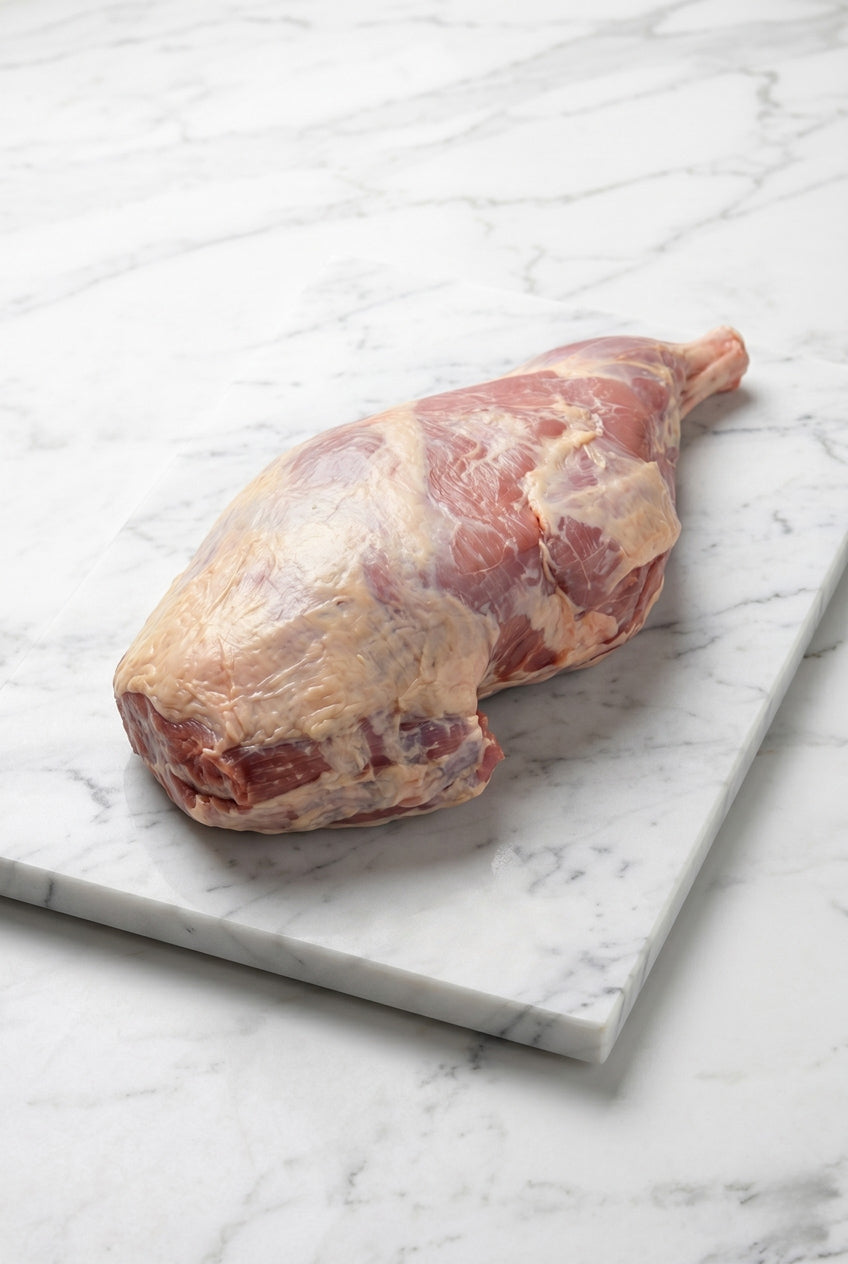
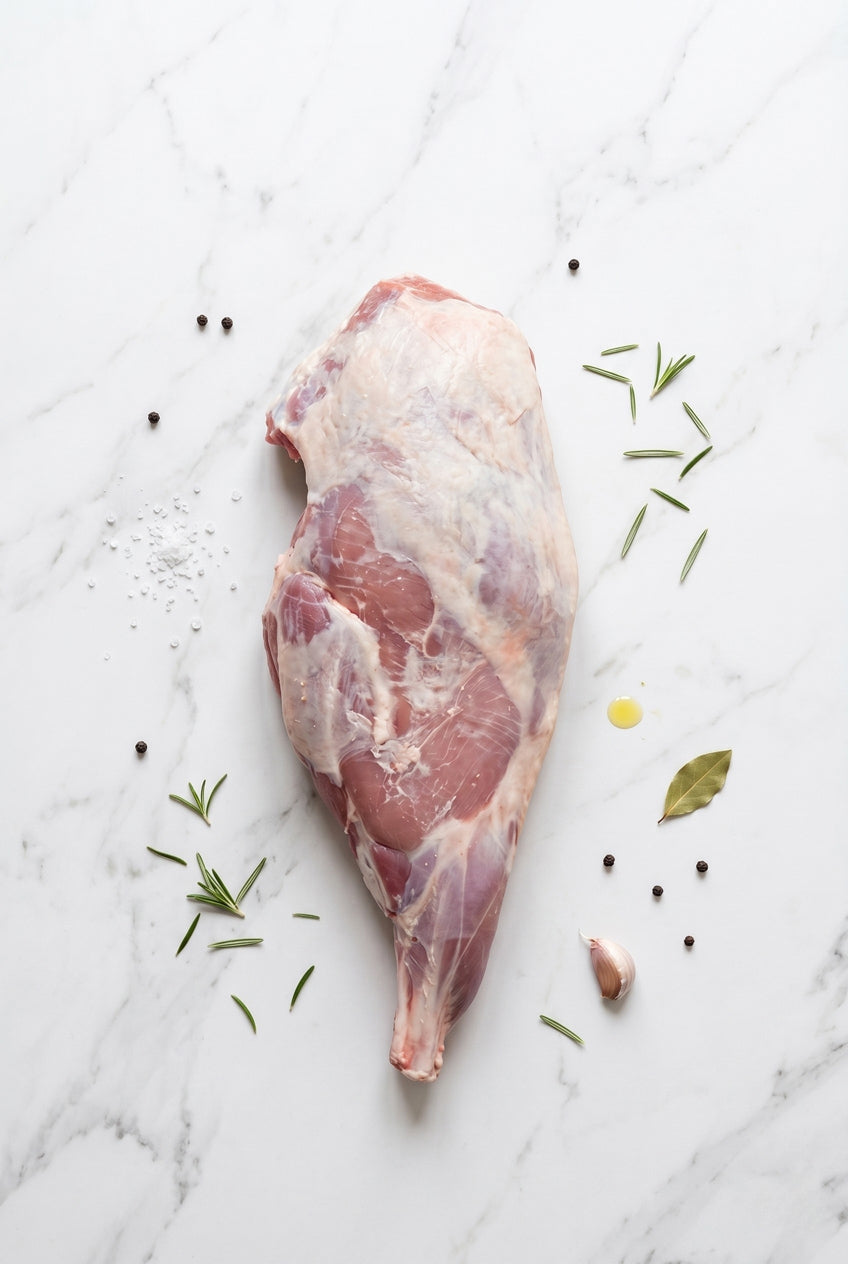
"Large, convivial roast, tender and tasty, baked in the oven."
Livraison Offerte
Dès 125€ d'achat
Chaîne du Froid
Fraîcheur garantie
Qualité Artisanale
Découpe tradition
The leg of lamb is a large cut, perfect for a weekend roast, with generous meat and a beautiful carve. It cooks very well in the oven to achieve a golden-brown exterior and a juicy interior, provided you manage the heat and let it rest before slicing. Simple seasoning with garlic and herbs, followed by basting during cooking, results in a rich and flavorful dish. For a clean presentation, slice thinly in the appropriate direction and serve with roasting juices or a light sauce. Prepared by your butcher, Allaert, a well-established business since 1978, serving customers in Belgium only.
Does not contain: sulphur dioxide and sulphites, molluscs, celery, eggs, milk, crustaceans, lupin, peanuts, sesame, soy, gluten.
Delivery and freshness (Belgium only)
- Guaranteed cold chain: Your orders are carefully packed and shipped under controlled temperature (between 0 and 4°C) via DPD Fresh.
- Costs and delivery times: Calculated automatically when validating your cart.
- Receiving your package: As our products are ultra-fresh, your presence is essential at the time of delivery. Place the products in the refrigerator immediately upon receipt.
- Returns: As these are perishable goods, returns are not accepted. We cannot be held responsible in the event of your absence or an incorrect address during delivery.
- Customer service: A problem with your order (damaged or non-compliant package)? Contact us the same day with photos of the package and products at sales@allaert-meat.be or at +32 2 521 28 56.
Returns and refunds
- No standard returns: As these are perishable products subject to the cold chain, we do not accept returns or refunds for non-defective products to guarantee food safety.
- Exceptions (refund or replacement): We only intervene if the order is defective or non-compliant (damaged product, abnormal appearance or smell, missing or incorrect item, faulty packaging).
- Report a problem: Contact us as soon as possible after delivery with your order number, a description of the problem, and clear photos of the product and its packaging.
- Important instructions: For safety reasons, do not return any products to us without our prior validation. Keep the affected items chilled while we analyze the issue.
- Claims contact: Send your request to sales@allaert-meat.be or call +32 2 521 28 56.

Standard Allaert
Uncompromising quality since 1978
When you choose a cut of meat at Allaert, you're not just buying meat; you're participating in a legacy. Each cut is hand-selected by our master butchers, guaranteeing that only the very best reaches your table.
Delivery 0-4°C
Via DPD Fresh & Secure Chain
Artisanal know-how
Hand-cut and precision
Authentic taste
Lamb selected for its tenderness and aroma
We prioritize lambs whose origin and seasonality yield naturally flavorful meat. A rigorous selection process ensures tender meat with a perfectly balanced flavor profile, never overpowering. This guarantees delicate cuts, perfect for refined dishes and family recipes alike.

Everything you need to know before you buy
FAQ about Leg of lamb | 3000 g
Which cooking method produces a juicy and well-brown roast?
The most reliable method is oven baking, starting with a browning phase followed by a gentler heat to finish. Dry the surface, season, then begin with high heat to create a crust. Next, continue at a moderate temperature, basting regularly with the juices. Let it rest before slicing; this keeps it moist and prevents the juices from running onto the cutting board.
Should it be left to rest before slicing, and why?
Yes, resting is essential for a clean presentation and a more tender texture. After cooking, the fibers relax and the juices redistribute throughout the meat. Without resting, you lose more juices when slicing and the slices appear drier. Simply cover and let it rest while you prepare the sauce or side dishes.
With or without bones, which is the best choice for cooking?
With the bone in, you often gain in flavor and the cooking remains gentler, while still maintaining an attractive presentation. Boneless, it's easier to slice and practical for more even cooking, especially if you plan to stuff or roll it. In both cases, success depends primarily on controlled cooking, regular basting, and resting before slicing.
How much should I allow per person?
Since this is a dish meant for sharing, the portion size depends on appetite and side dishes. With a generous starter and garnish, a reasonable portion is often sufficient. For a more substantial meal, prepare a larger portion to allow for easy serving and potentially some leftovers. Leftovers are a bonus; they can be reused very well, sliced thinly, in a salad, or in a hot dish.
How to prevent meat from drying out when reheating
Reheat gently, always keeping it slightly moist. The best method is a low oven with a little juice, sauce, or stock in the base, then briefly at a higher temperature if you want to lightly brown the meat. Avoid the microwave, as it quickly hardens the meat. A simple trick is to slice the meat before reheating and lightly coat it with the sauce; this keeps the slices more moist.
What recipe and seasoning ideas work best?
The classic winning combination is garlic, rosemary, thyme, and bay leaf, with a good, reduced roasting juices. For a more indulgent version, add a thin herb crust or a touch of mild mustard on top, without overpowering the flavor. Roasted potatoes, root vegetables, green beans, or creamy mashed potatoes are perfect sides. Leftovers can be transformed into hash browns, warm wraps, or cold slices for a quick and satisfying meal.
- Choosing a selection results in a full page refresh.