

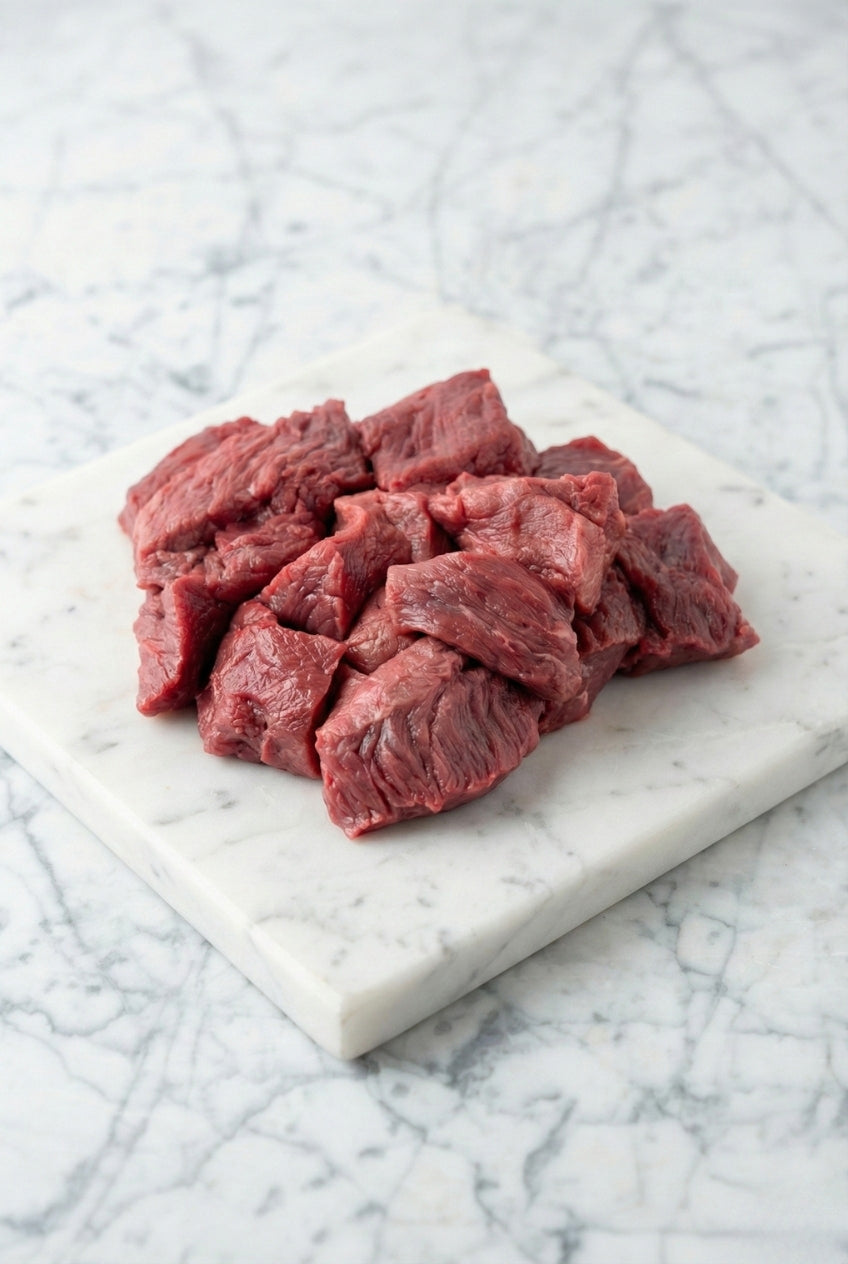
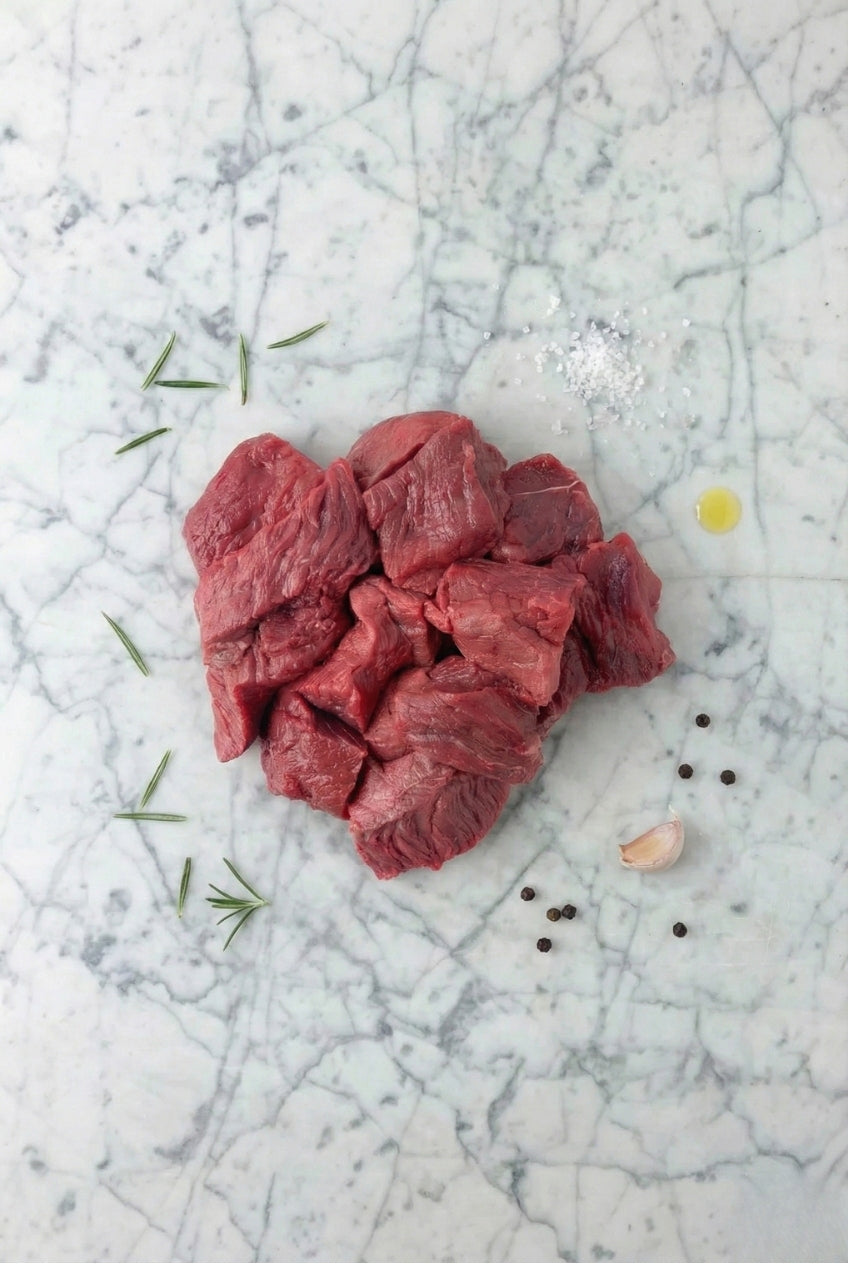
"Generously marbled Irish beef cubes, cut to melt slowly in your casseroles and offer an absolutely tender bite."
Livraison Offerte
Dès 125€ d'achat
Chaîne du Froid
Fraîcheur garantie
Qualité Artisanale
Découpe tradition
Cut from the best cuts of beef forequarter, such as the chuck or clod, our carbonade from the green pastures of Ireland offers exceptional natural marbling.
This grass-fed beef is distinguished by its deep red color and its collagen-rich fibers that literally melt during slow simmering.
To obtain tender, succulent meat, I recommend braising it for at least three hours in an amber beer or a full-bodied broth.
At Allaert Meat, we select these Irish beef cuts for their ability to bind sauces and deliver an authentic local flavor.
The result in the pot is shreddable, generous, and deeply flavorful meat.
Does not contain: sulphur dioxide and sulphites, molluscs, celery, eggs, milk, crustaceans, lupin, peanuts, sesame, soy, gluten.
Delivery and freshness (Belgium only)
- Guaranteed cold chain: Your orders are carefully packed and shipped under controlled temperature (between 0 and 4°C) via DPD Fresh.
- Costs and delivery times: Calculated automatically when validating your cart.
- Receiving your package: As our products are ultra-fresh, your presence is essential at the time of delivery. Place the products in the refrigerator immediately upon receipt.
- Returns: As these are perishable goods, returns are not accepted. We cannot be held responsible in the event of your absence or an incorrect address during delivery.
- Customer service: A problem with your order (damaged or non-compliant package)? Contact us the same day with photos of the package and products at sales@allaert-meat.be or at +32 2 521 28 56.
Returns and refunds
- No standard returns: As these are perishable products subject to the cold chain, we do not accept returns or refunds for non-defective products to guarantee food safety.
- Exceptions (refund or replacement): We only intervene if the order is defective or non-compliant (damaged product, abnormal appearance or smell, missing or incorrect item, faulty packaging).
- Report a problem: Contact us as soon as possible after delivery with your order number, a description of the problem, and clear photos of the product and its packaging.
- Important instructions: For safety reasons, do not return any products to us without our prior validation. Keep the affected items chilled while we analyze the issue.
- Claims contact: Send your request to sales@allaert-meat.be or call +32 2 521 28 56.

Standard Allaert
Uncompromising quality since 1978
When you choose a cut of meat at Allaert, you're not just buying meat; you're participating in a legacy. Each cut is hand-selected by our master butchers, guaranteeing that only the very best reaches your table.
Delivery 0-4°C
Via DPD Fresh & Secure Chain
Artisanal know-how
Hand-cut and precision
Selected livestock
Beef selected for its flavor and texture
We prioritize animals from carefully managed farms, raised on a controlled diet with respect for their natural growth cycle. This yields beautifully marbled, consistent, and flavorful meat that retains its tenderness when cooked. Each cut is selected for its reliable quality, texture, and authentic beef flavor.

Everything you need to know before you buy
FAQ about Beef carbonnade (Ireland) | 1000 g
Why choose Irish beef for carbonade?
Irish beef is primarily grass-fed, thanks to a damp climate that is ideal for pastures. This gives the meat an intense red color, a slightly yellow, very aromatic fat, and a perfect texture for slow cooking.
What cuts exactly make up this carbonnade?
As a butcher, I select cuts from the forequarter of the beef, mainly the chuck, blade, and clod. These pieces, rich in connective tissue and collagen, are essential for achieving a creamy sauce and meat that shreds easily.
What's the best technique for cooking carbonnade?
The key is slow braising. First, sear the meat cubes over high heat in some fat to caramelize the juices. Then, add beer or broth, reduce the heat, and simmer, covered, for 3 to 4 hours over very low heat.
How should I store this meat before cooking?
Store the meat in the coldest part of your refrigerator, between 0 and 4°C, in its original packaging. Remove it at least 30 minutes before searing to avoid thermal shock, which would toughen the muscle fibers upon contact with heat.
What to drink with a slow-cooked beef carbonnade?
If you cook it à la Flamande, a dark or amber abbey beer is the natural choice. For a wine pairing, opt for a full-bodied red with mellow tannins, such as a Côtes-du-Rhône Villages or an oaked Alsace Pinot Noir.
Should I prepare the carbonnade the day before?
Absolutely. Stews always taste better reheated. Cooling allows the meat fibers to absorb the sauce and cooking aromas. Reheat on very low heat the next day for about twenty minutes before serving.
- Choosing a selection results in a full page refresh.